Top dollar isn't a magic number. It's the highest price a real buyer will actually pay, on the timeline you need, with terms you can live with. And getting there isn't about luck or hot markets - it's about a stack of decisions you make in the 60 days before your home ever hits the MLS.
This is the playbook. The same one I walk through with every seller before we list.
1. Pricing is the single biggest lever - and most sellers blow it
There's a stubborn myth that "we can always come down." It sounds reasonable. It costs sellers thousands.
Here's what actually happens when you overprice:
Week 1: the showings come in. Buyers compare you to better-priced comps and pass.
Week 2: showings slow. Your listing starts to feel "stale" to the agents watching it.
Week 3: you reduce. New buyers wonder what's wrong with it.
Week 6: you reduce again. You finally sell — usually below what you'd have gotten if you'd priced right on day one.
The data on this is consistent across markets: homes that sell within their first two weeks routinely sell for 2–5% more than homes that sell after a reduction. Pricing slightly under fair market - to create urgency and multiple offers - almost always nets more than pricing high and hoping.
The pricing conversation with your agent should be the longest one you have before listing. If it isn't, you've got the wrong agent.
2. Prepare the home like it's the last decision you'll ever make
The single highest-return prep work, in order:
Deep clean. Not a normal clean. A move-out-grade clean - grout, baseboards, inside the oven, light fixtures, ceiling fans. $400–$600 in Dallas. Easy 10x return.
Declutter. Pack like you're moving in three weeks, because you are. Empty 30% of every closet. Clear every countertop. Remove half the furniture from any room that feels full. Buyers buy space; visible space sells.
Paint the rooms that need it. Off-white or warm white on the walls. Fresh, neutral, and consistent across the main floor. Skip wild colors. A whole-house repaint runs $3,500–$6,000 and routinely returns 3–5x.
Light the home aggressively. Replace every yellowed bulb with daylight LEDs (3000–3500K). Open every blind. A bright home shows 15–20% larger than a dim one - same square footage, completely different feel.
Fix the obvious. Squeaky doors, broken switch plates, the burned-out bulb over the kitchen island, the loose handrail. None of it is expensive. All of it adds up in a buyer's head as "this home is taken care of."
3. Get a pre-listing inspection (in most cases)
Hire an inspector before you list - for $500–$700 - and you get two things:
You find the problems before the buyer does. You can fix what's worth fixing and disclose the rest, instead of getting a 12-item credit demand during the option period.
You get a document you can show buyers. Some sellers attach the inspection report to the listing. It signals confidence and reduces buyer anxiety, especially on older homes.
When not to pre-inspect: a fully renovated home where you already know the systems are new, or a property where you're selling clearly as-is (estate sale, investor target). Otherwise, do it.
4. Stage what matters, skip what doesn't
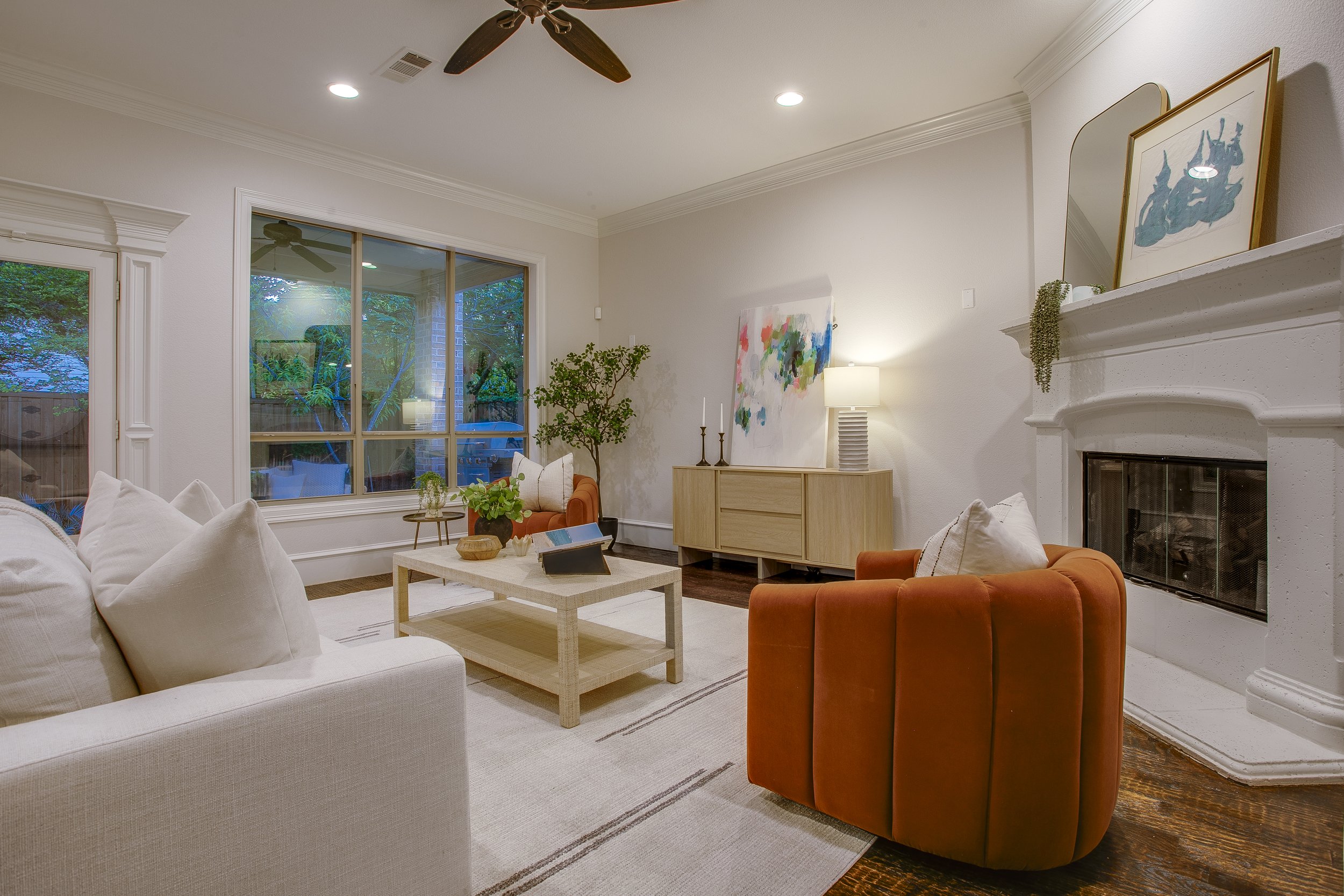
You don't need to professionally stage every room. You need to stage the rooms that sell the house:
The living room (or whatever's visible from the front door)
The primary bedroom
The kitchen counters
Any room that's currently a mess of mixed uses (the "office/guest room/storage room")
If your home is vacant, partial staging - main living area, primary bedroom, dining runs $2,500–$4,500 in Dallas for a 60-day rental and routinely returns 5–10x in either faster sale or higher price.
If you're living in it, a staging consult (a designer walks the home and writes a punch list) is $200–$400 and is the highest-ROI consult you'll do.
5. Photography is where most listings lose money before they even start
Most buyers in 2026 decide whether to tour your home in the first three photos they see on Zillow or their agent's listing alert. If those photos are bad, you've lost them - and the price they would have paid.
What good photography looks like:
A photographer who shoots real estate full-time (not a generalist)
Wide-angle, but not so wide it distorts the rooms
Bright, evenly lit — no dark corners
An exterior twilight shot for evening curb appeal
Drone shots if your lot or roof are worth showing
A floor plan rendering — buyers eat these up
Budget $400–$800 for the photography package. This is not the line to cut.
6. Time the listing for when buyers are actually shopping
In Dallas, the best windows to list are:
Late February through May (spring market — strongest)
Mid-August through mid-October (relocation and school-year-end buyers)
The worst windows are mid-November through mid-January
If you have flexibility, lean into the strong windows. If you don't, you can still sell well in a soft window — but you need pricing and prep to do more work.
Within the week: list on a Wednesday or Thursday. That gives the listing 24–48 hours of buzz before the weekend showings, where most offers actually originate.
7. The coming-soon window is free leverage
A 7–10 day coming-soon period before going live on MLS lets you:
Generate buyer interest without burning days-on-market
Let your agent's network of buyer agents preview privately
Create a "Saturday open house with offers reviewed Monday" cadence that produces multiple offers
Some sellers waste this window. The good ones use it to build a queue of motivated buyers ready to act the moment the home goes live.
8. Make the home easy to show
Every showing you turn down — because you weren't ready, the dog was barking, the laundry was on the bed — is a buyer you may not get back. The best-selling homes are the easiest to show:
Lockbox access for agents
Two-hour notice or less
Showings welcomed evenings and weekends
You're not in the home during showings (always)
The home is photo-ready every day for the first two weeks
The first 14 days of a listing produce 60–70% of the showings. Be available for all of them.
9. When multiple offers come in, work the offers - not just the price
The highest offer isn't always the best offer. Things that matter just as much:
Is the financing strong? (Underwritten approval vs basic pre-approval)
What's the appraisal contingency? (Waived = stronger; with appraisal gap coverage = also strong)
What's the option period length and fee?
How much earnest money?
What's the close timeline?
Any seller concessions requested?
Your agent should be calling every offer agent and pushing them to improve their terms - not just the price. A $5,000 higher offer with a long close and shaky financing is often worth less than a $5,000 lower offer that's cash and closes in two weeks.
10. The walkthrough and move-out matter more than people think
The last 48 hours of a transaction is where deals die or close clean. Things that buy you goodwill and avoid last-minute issues:
Leave the home cleaner than the buyer expects
Leave the warranties, manuals, and codes (garage, security, smart thermostats) in a folder on the counter
Don't strip anything that was attached and visible during showings - fixtures, mounts, mirrors. If it was bolted to the wall, it conveys unless you wrote it into the contract.
Be flexible on the walkthrough timing
Buyers who feel taken care of don't nickel-and-dime you on closing day. Buyers who feel jerked around will find something to fight about.
11. What not to spend money on before listing
Just as important as what to fix is what to leave alone:
Major remodels right before listing (kitchens, bathrooms) - you rarely recover the full cost
Upgrading appliances to high-end if the rest of the kitchen doesn't match
Adding a pool (almost never pays back)
Custom paint colors you love (paint it neutral)
Replacing carpet with carpet of similar grade (buyers will replace it anyway)
Landscaping that takes a year to mature
The renovations that pay back are the small, visible ones: paint, light fixtures, hardware, deep clean, fresh mulch. The expensive renovations rarely return their cost.
12. The right agent is the multiplier on all of this
Everything in this playbook is easier with an agent who's done it 100 times. They'll see the things you can't see in your own home. They'll push back when you want to overprice. They'll work the offer table when it's time. And they'll know the local buyer pool well enough to position the home for it.
The wrong agent - or the right friend who happens to be an agent - will let you make the expensive mistakes politely. That's the most expensive politeness in real estate.
The 60-day pre-listing sequence
If I had to compress everything into a checklist:
60 days out: Interview agents. Decide on one. Walk the home with them and build a prep list.
45 days out: Pre-inspection. Start the punch list. Get paint and repair quotes.
30 days out: Paint, repair, deep clean. Staging consult or staging install.
14 days out: Final clean. Photography. Floor plan. Stage final styling.
7 days out: Listing goes coming-soon. Buyer-agent outreach starts.
Day 0: Listing goes live, Wednesday or Thursday. Open house Saturday. Offers reviewed Monday or Tuesday.
The sellers who get top dollar aren't the ones who got lucky. They're the ones who spent 60 days preparing for one decision.
Next step
If you're 30–60 days from listing and want a working assessment of your home - what to fix, what to skip, where the pricing should land - that's the conversation worth having early. The fixes that move the needle take time. The ones that don't can wait.
Eugene Gonzalez is a Realtor with ALTA Realty Group in Dallas. He works with buyers and sellers across Oak Cliff, Kessler Park, Bishop Arts, Lakewood, Preston Hollow, and North Dallas. Reach out to Eugene Gonzalez Top Realtor in Oak Cliff