Yes, Bishop Arts District is a strong buy in 2026 — and the case holds up under scrutiny. If you're searching for Bishop Arts District homes for sale in Dallas, you're looking at one of the city's most consistently in-demand urban corridors. Walkability, cultural density, and structurally tight inventory create the kind of demand that doesn't evaporate when the broader market softens. This isn't a neighborhood people are betting will arrive. It already has.
What Are Homes Selling For in Bishop Arts District Right Now?
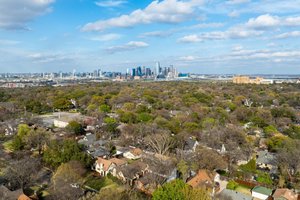
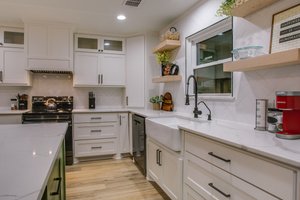
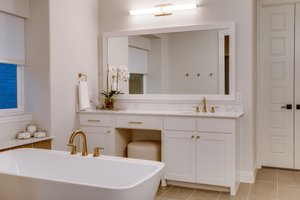
In the 75208 zip code — which covers Bishop Arts, Winnetka Heights, and the surrounding North Oak Cliff streets — most homes are selling in the $420,000 to $580,000 range. Price per square foot typically runs $250 to $350, with renovated craftsman bungalows and newer infill construction both commanding the top end of that range.
Inventory stays tight here by structure, not by luck. The housing stock is mostly pre-1960s bungalows on narrow lots with limited room for new construction. That constraint matters: restricted supply combined with consistent buyer demand keeps values durable even when broader Dallas market conditions shift.
Winnetka Heights homes for sale in 75208 can offer a lower entry point than the Bishop Arts core — sometimes in the $370,000 to $450,000 range — while still putting you in the walkable Oak Cliff pocket. It's worth running a side-by-side comparison if your budget sits below $480,000.
Is Bishop Arts District Safe?
Safety is a fair question and deserves a straight answer. The Bishop Arts core along Bishop Avenue and Davis Street is active, well-lit, and heavily trafficked throughout the day and into the evening. It functions more like a small urban village than a transitional neighborhood, and consistent foot traffic is itself a stabilizing force.
North Oak Cliff, like any urban Dallas neighborhood, has variation by block. Crime rates in this corridor have improved as commercial density has increased and more residents have moved in. Before buying, walk the specific streets you're considering, pull current crime data at the block level, and spend time in the neighborhood at different hours. A buyer's agent with deep local knowledge will walk you through this without sugarcoating it.
Walkability, Amenities, and What Daily Life Actually Looks Like
Bishop Arts is one of the most walkable neighborhoods in Dallas — not by suburban Dallas standards, but by any urban standard. Independent restaurants, boutique retail, coffee shops, and art galleries are within walking distance of most addresses in the district. The neighborhood draws consistent foot traffic, which feeds both the lifestyle and the underlying property values.
For remote workers and buyers who want to reduce car dependency, this is one of the few Dallas neighborhoods that genuinely delivers. That's a scarce feature in a city built around the highway, and it commands a real and sustained premium in resale value.
For buyers who want more space without leaving the Oak Cliff ecosystem, North Oak Cliff homes for sale in Dallas — particularly in Kessler Park — offer larger lots and more square footage at similar or slightly higher price points. But if walkability and neighborhood density are your primary criteria, Bishop Arts delivers that in a way few Dallas addresses can match.
Who Should Buy in Bishop Arts District in 2026?
Bishop Arts is best suited for buyers who prioritize urban walkability, neighborhood identity, and long-term appreciation over raw square footage. It fits buyers who want to own in a neighborhood that has already proven its staying power rather than one they're speculating on.
It's not the right fit if strong DISD elementary school ratings are your primary driver, or if you need 2,500-plus square feet at a mid-$400s price point — that's a different conversation in a different zip code. But if your criteria include culture, community, and a market where demand holds even in slower cycles, Bishop Arts District checks out clearly in 2026.
Eugene Gonzalez has worked extensively across Oak Cliff and knows the 75208 market at the street level — which properties are priced right, which blocks are moving fastest, and how to write a competitive offer when inventory is limited. Whether you're comparing Bishop Arts District against Winnetka Heights or weighing 75208 homes for sale against other Dallas zip codes, working with a local Oak Cliff buyer's agent who knows this market firsthand makes a tangible difference in outcome.
Ready to see what's currently available? Reach out to Eugene for a current list of Bishop Arts District homes for sale in Dallas and a direct read on where the market stands right now.
Frequently Asked Questions
Is Bishop Arts District a good place to live in Dallas?
Yes. Bishop Arts District consistently ranks among Dallas's most livable urban neighborhoods. Its walkability, independent restaurant and retail scene, and strong neighborhood identity make it especially well-suited for remote workers, young professionals, and buyers who want cultural richness alongside long-term home value. The trade-off is square footage and price per foot compared to suburban Dallas — but buyers who prioritize lifestyle and appreciation tend to find the value proposition holds.
What is the average home price in Bishop Arts District Dallas?
Homes in the 75208 zip code — which covers Bishop Arts, Winnetka Heights, and nearby North Oak Cliff streets — typically sell in the $420,000 to $580,000 range, with price per square foot generally running $250 to $350. Renovated bungalows and new construction command the top of that range. Properties in Winnetka Heights or those needing updates can offer entry points closer to $370,000 to $440,000. Inventory is limited, so well-priced homes in this zip code tend to move quickly.
Is Bishop Arts District safe?
The Bishop Arts core along Bishop Avenue and Davis Street is one of the more active and well-trafficked urban areas in Dallas, which contributes meaningfully to day-to-day safety. North Oak Cliff has variation by block, as most urban Dallas neighborhoods do, and conditions have improved as the area has grown denser and more commercially active. Buyers should review current crime data for specific streets they're considering, walk the neighborhood at different times of day, and work with a local agent who knows the area at that level of detail.